

Last Updated: November 1, 2026
Quick Summary
You can find a wide selection of crochet hooks for sale in Canada at JOERIAKNITS, where we stock Clover Amour, Addi Comfort Grip, KnitPro Waves 2.0, Lantern Moon and KnitPro Oasis and Vybe crochet hook sets. Singles start at $14.30 and sets range from $62.99 to $215.00, so you can try one hook before committing to a full set.
- Crochet hook handles - why they matter
- Features of a quality crochet hook
- Crochet hook size guide
- Hook brands worth considering
- Pattern gauge beats the yarn label recommendation, which beats general rules of thumb.
Table of Contents
- Quick Comparison: Crochet Hooks at a Glance
- What Makes a Quality Crochet Hook?
- Ergonomic Crochet Hooks: Comfort for Long Sessions
- Crochet Hook Brand Selection
- Crochet Hook Size Guide: Matching Hook to Yarn and Project
- Choosing Your First Crochet Hook Set
- Frequently Asked Questions
Quick Comparison: Crochet Hooks at a Glance
Shopping for crochet hooks in Canada usually means choosing between imported sets with long shipping times and whatever your local shop happens to stock. At JOERIAKNITS, we offer a curated selection of crochet hooks so you can compare materials, sizes and handles in one place.
Here is the short list of the some of the hooks and sets available before the detail:
|
Hook or Set |
Price (CAD) |
Sizes Included |
Handle Type |
Best For |
|---|---|---|---|---|
|
Clover Amour single hook |
$15.50 |
Singles, small to medium |
Elastomer rubber |
Testing the Amour grip first |
|
Addi Comfort Grip single hook |
$14.30 |
Singles |
Colour-coded easy grip |
One-off size top-ups |
|
KnitPro Waves 2.0 Deluxe set |
$62.99 |
2.0-6.0 mm, 9 hooks |
Rubber ergonomic |
First proper set |
|
KnitPro Oasis Interchangeable set |
$86.00 |
2.0-5.0 mm, 7 hooks |
Grey onyx wood |
Travel and fine work |
|
KnitPro Waves 2.0 Grande set |
$102.00 |
2.0-12.0 mm, 14 hooks |
Rubber ergonomic |
Chunky and blanket work |
|
Clover Amour 10-piece set |
$160.59 |
2.25-6.0 mm |
Elastomer rubber |
Long sessions, full range |
|
Addi Comfort Grip 9-piece set |
$190.00 |
2.0-6.0 mm |
Easy grip |
Comfort-first crafters |
|
AddiSwing Standard set |
$215.00 |
2.0-8.0 mm, 7 hooks |
Ergonomic easy grip |
Mixed project rotation |
You can browse the full crochet hook range by brand and size if you already know what you want.
What Makes a Quality Crochet Hook?
Three things separate a quality crochet hook from a cheap one, and none of them are visible in a product photo.
Tip shape. Hook tips come in two profiles: inline, where the hook throat is cut straight into the shaft, and tapered, where the throat curves out before narrowing back. Inline tips (common in Addi hooks) catch yarn cleanly and release it quickly — good for tight tension and fine yarns. Tapered tips (common in Clover and KnitPro) glide in more smoothly and suit makers who crochet loosely or work with splitty yarn. Neither is objectively better; the right tip is the one that matches how you hold a hook and how your tension runs.
Handle-to-shaft join. A flush join between handle and shaft matters more than it sounds. A gap or step catches yarn at speed, and on a long session you’ll feel every one. Run your thumbnail along the join on any hook before committing to a set — it should be seamless.
Sizing accuracy across a range. Sets from quality brands keep sizing consistent across every hook, so a 4.0 mm in the set is the same diameter as a 4.0 mm replacement you buy separately. Budget hooks often drift, which means your gauge shifts when you change sizes mid-project.
Ergonomic Crochet Hooks: Comfort for Long Sessions
Ergonomic crochet hooks give your fingers a wider, softer surface to hold than a bare metal shaft. A hook you use for twenty minutes a week and a hook you use for four hours a day are different purchases.
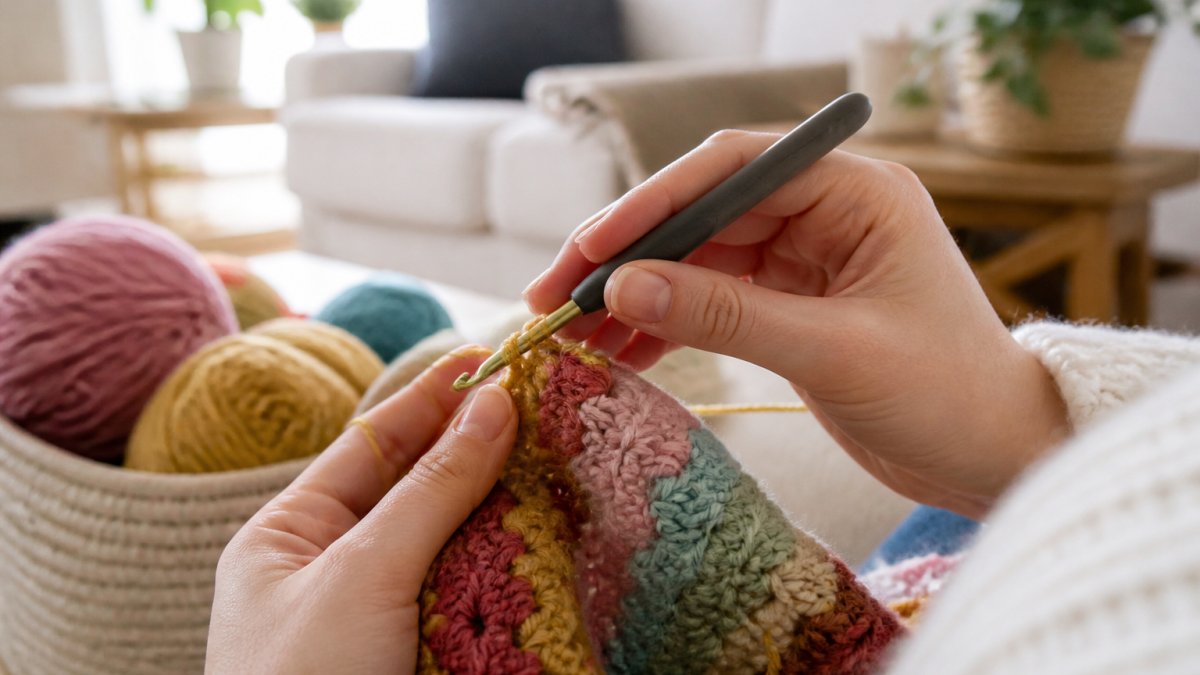
The three handle families, compared
|
Handle type |
Examples in range |
Weight |
Grip feel |
Best for |
|---|---|---|---|---|
|
Elastomer rubber |
Clover Amour, KnitPro Waves 2.0, KnitPro Vybe |
Light to moderate |
Cushioned, slightly tacky |
Long daily sessions, tighter grips |
|
Moulded easy grip |
Addi Comfort Grip, AddiSwing |
Moderate |
Firm, colour-coded by size |
Makers who prefer a defined thumb rest |
|
Wood / Ebony |
KnitPro Oasis interchangeable, Lantern Moon Radiance Set, Lantern Moon (sold as single hooks) |
Light |
Warm, smooth, less tacky |
Fine work and travel, cooler hands |
Hook Materials, Heads and Handles Explained
Shaft material determines how yarn moves over the hook. Aluminum shafts are the standard — smooth, consistent, and fast through most fibres. Brass-tipped hooks (like Addi’s Turbo line in knitting needles) are even slicker but uncommon in crochet. Wood and ebony hooks (Lantern Moon) have a slight natural drag that grips the yarn rather than gliding past it — useful for slippery fibres like silk blends and bamboo, where an aluminum hook can let loops slide off before you catch them.
Head profile is inline or tapered (covered above under tip shape). The short version: inline for tight tension, tapered for loose.
Handle material divides into three families — elastomer rubber, moulded easy grip, and wood. Each changes the grip feel, the weight, and how the hook warms in your hand. Wood and ebony handles stay cooler in a warm room, which matters on long summer sessions; rubber handles warm quickly to body temperature, which some makers prefer.
One practical note: handles that are colour-coded by size (Addi, Clover Amour, KnitPro Vybe) are more useful than they sound. Mid-project size changes are faster by colour than by squinting at a stamped number.
What professional use actually demands
Three things matter when choosing a hook for frequent use:
- Tip retention. Check that the tip keeps its shape with regular use.
- Handle-to-shaft join. A flush join between handle and shaft is worth checking before you buy.
- Consistent sizing across the range. Sets keep sizing consistent across the range, which helps when you switch sizes mid-project.
Accessibility and extended-session considerations
Handle design affects more than comfort — it affects how long you can work before your hand forces you to stop.
For makers with arthritis, hypermobility, or repetitive strain, the key variables are handle diameter, grip resistance, and hook weight. A wider handle reduces the pinching force your fingers need to hold the hook — most ergonomic handles run 20–25 mm in diameter, compared to 8–10 mm for a bare metal shaft. Elastomer rubber handles like the Clover Amour provide light resistance that keeps the hook from rotating in your hand without requiring a tight grip. Moulded handles like the Addi Comfort Grip have a defined thumb rest that locks your hand position and reduces micro-adjustments per stitch.
Hook weight matters more in larger sizes. A chunky blanket in 8.0 mm or above generates real wrist torque per stitch, and a lightweight wooden or resin handle reduces cumulative fatigue compared to a heavier metal one.
If you’re managing any hand or wrist condition, try a single hook in each handle family before buying a set — the right fit is personal and not something a review can predict for you. Persistent pain during or after crocheting is a signal to stop and speak to a health professional, not to push through with a better grip.
BRAND SELECTIONS
Addi Comfort Grip Crochet Hooks
The Addi Comfort Grip is a straightforward ergonomic hook — an aluminum shaft with a colour-coded easy-grip handle that makes size identification instant. The handle is wider than a bare metal shaft, which reduces the pinching force your fingers need to hold the hook, but it’s not curved or moulded with a thumb rest. That makes it a good first ergonomic hook for makers who want something more comfortable than a bare hook without committing to a shaped handle they haven’t tried yet. Singles start at $14.30, making it the lowest-cost entry point into ergonomic crochet in our range.
 The AddiSwing is Addi’s fully ergonomic hook line with both a standard and maxi hook length (0.5 inch longer). The German made crochet hooks have a curved handle designed to sit along the natural line of your hand and forearm rather than requiring you to angle your wrist to hold it. The AddiSwing Maxi is best for thicker yarns, projects with many loops on the hook at once, or tighter/energetic crocheting where you need extra reach. It is also reinforced inside to make the handle more robust. The addi aluminum hook head has a deeper throat and a more pointed tip than a standard hook — Addi updated the head design and it now carries utility model protection. That deeper throat catches yarn cleanly and releases it quickly, which suits makers who crochet at speed or with tight tension. Available in 2.0–8.0 mm; the AddiSwing Standard set covers seven hooks in a case and is the most practical entry point.

The Vybe is KnitPro’s newest crochet hook line — soft elastomer rubber handles in soft, pastel colours with a rose-coloured aluminum shaft. The handle is slightly softer and more flexible than the Waves 2.0 range, which suits makers who prefer a yielding grip rather than a firm one. The colour-coded sizing is one of the clearest in the range, and the hooks have a light, balanced feel in hand. The Vybe crochet hooks are currently available as a set and the individual hooks are coming soon to JOERIAKNITS.
Lantern Moon Single Ended Crochet Hooks
Lantern Moon singles are carved from sustainably harvested ebony wood — warm, smooth, and noticeably heavier than aluminum hooks of the same size. The weight is the point: it reduces how tightly you need to grip the hook, distributing the holding force across your palm rather than concentrating it in your fingers. The natural drag of the wood is a genuine advantage with silk, bamboo, or any slippery fiber. From $17 per hook, they’re an investment worth trying on a single size before buying across the range.
Crochet Hook Size Guide: Matching Hook to Yarn and Project
Hook size is measured in millimeters across the shaft, and the right size depends on your yarn weight and the fabric you want. Most worsted-weight projects sit between 4.0 mm and 5.5 mm, but the patterns stated gauge always wins over a general rule.
Addi Comfort Grip Crochet Hooks →
Metric to US letter conversion
US letter sizes do not map cleanly onto metric sizes, which trips up a lot of makers following patterns from different countries. A metric to US size chart lets you check conversions before you start. Keep this chart handy so you can convert before you start rather than frogging half a project.
|
Metric (mm) |
US letter / name |
Typical use |
|---|---|---|
|
0.60-1.75 |
Steel thread hooks |
Lace, thread, doilies |
|
2.25 |
B / 1 |
Fingering, sock yarn |
|
2.75 |
C / 2 |
Fingering, light sport |
|
3.25 |
D / 3 |
Sport, DK |
|
4.00 |
G / 6 |
Worsted |
|
4.50 |
7 |
Worsted, aran |
|
5.00 |
H / 8 |
Aran, garments |
|
5.50 |
I / 9 |
Bulky |
|
6.00 |
J / 10 |
Bulky, super bulky |
|
6.50 |
K / 10.5 |
Super bulky, blankets |
|
8.00 |
L / 11 |
Super bulky |
|
9.00+ |
M / N and up |
Chunky blankets, rugs |
Letter-to-millimeter mapping varies slightly between manufacturers, so always trust the millimeter stamp on the hook over the letter on the pattern.
Reading the yarn label and the pattern gauge
Every yarn label carries a recommended hook range and a gauge square. Start inside that range, then swatch. If your swatch comes out wider than the pattern gauge, drop a hook size; if narrower, go up. This is the single most reliable way to match hook to yarn, and it is faster than guessing from the yarn weight name alone.
Recommendations by technique, yarn and project
- Lace and thread work: 0.60 mm to 2.0 mm. Fine steel hooks keep the stitch definition that thread patterns rely on.
- Fingering and sock yarn: 2.25 mm to 3.5 mm. A 2.25 mm or 2.75 mm covers most sock and shawl patterns.
- Worsted and Aran: 4.0 mm to 5.5 mm. The core working range for garments, amigurumi and crafts.
- Bulky: 6.0 mm to 8.0 mm. Larger hooks change tension quickly, so swatch before committing to a blanket.
- Super bulky: 9.0 mm and up. Handle weight and grip matter more here because each stitch carries more torque.
Matching hook material to yarn
Size is only half the choice. Slippery fibers such as silk blends and some acrylics behave better on a wooden or bamboo hook that grips the yarn slightly, while splitty or tightly plied yarns suit a smooth aluminum head that glides without catching individual plies. If you work the same yarn weight across several projects, a set that keeps the same head and handle across the size range saves you from re-learning the feel every time you change size.
Choosing Your First Crochet Hook Set
A first set should cover the sizes you will actually use, not every size that exists. For most makers that means 2.0 mm to 6.0 mm in one case, which handles lace through aran.
The KnitPro Waves 2.0 Deluxe set includes nine aluminum hooks with colourful rubber handles and a zipped aqua case. If you plan to work chunky blankets, the Grande version adds sizes up to 12.0 mm across 14 hooks.
Ready to commit to a full set? The Clover Amour 10-piece hook set gives you the smooth aluminum head and colour-coded handles across the core range. If you want something lighter with a soft grip, the KnitPro Waves 2.0 Deluxe set is the other option worth weighing. For a wooden handle, look at the KnitPro Oasis or Lantern Moon Radiance sets instead.


Frequently Asked Questions
Are ergonomic crochet hooks better for long-term crafting?
For most makers who crochet regularly, yes — a wider, cushioned handle reduces the pinching force your fingers need to hold the hook, which adds up over hours of work. The right ergonomic handle depends on your hand size and grip style: elastomer rubber (Clover Amour, KnitPro Vybe) suits makers who prefer a soft, slightly tacky grip; a colour-coded easy-grip handle (Addi Comfort Grip) suits those who want clear size identification with a wider hold; and a curved ergonomic handle (AddiSwing) suits makers who want the hook to follow the natural line of the hand and forearm. Try a single hook in your preferred handle family before buying a set.
How do I choose the right size crochet hook for my project?
Start with the yarn label, which recommends a hook size in millimeters, then match it to your pattern. Fine yarns such as fingering weight typically use 2.0 to 3.5mm hooks, worsted yarns sit around 4.0 to 5.5mm, and chunky yarns need 6.0mm and above. A crochet hook size guide that lists both metric and US sizes helps avoid conversion mistakes. Always crochet a gauge swatch, because your personal tension can shift the finished size even when you use the recommended hook.
Where can I buy high-quality crochet hooks in Canada?
JOERIAKNITS carries individual hooks and sets from Addi, KnitPro, Clover, and Lantern Moon, all shipped from Canadian stock — no customs fees, no cross-border wait. If you need a specific size for a project starting soon, checking stock early is the best move.
Choosing hooks is really choosing what your hands will put up with for the next few years, and the wrong handle shows up as soreness long before it shows up as a bad stitch. We stock quality hooks from brands makers already trust, ship from Canadian inventory, and donate 20% of annual net profits to Canadian charities supporting addiction recovery. Browse the range, start with a single hook or a full set, and get the right tool in your hand before your next project begins.
